
Choosing the right solar panel is one of the most important decisions you’ll make when going solar. With several types available on the market, each with distinct advantages and trade-offs, understanding the differences can save you money and maximize your energy production.
The three main types of solar panels used today are monocrystalline, polycrystalline, and thin-film. Let’s dive deep into each.
Monocrystalline Solar Panels
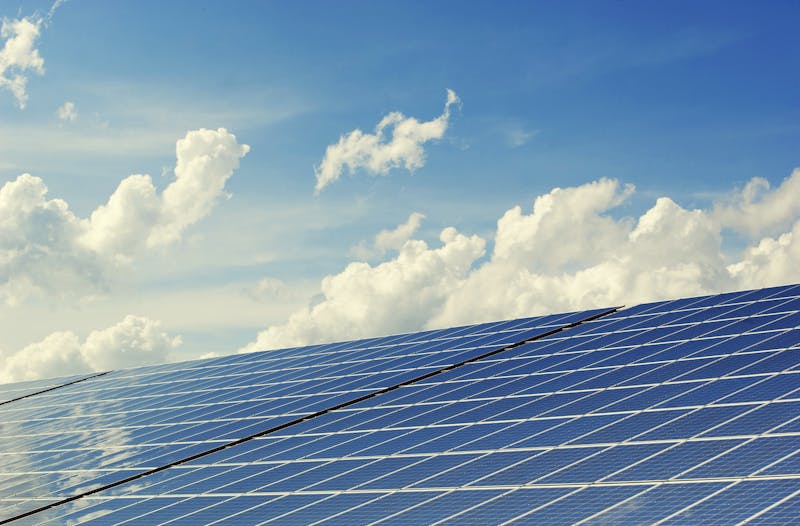
Monocrystalline panels are made from a single, continuous crystal structure of silicon. They are the oldest and most developed solar technology available.
Efficiency: 20–25%, the highest among commercial panels.
Appearance: Sleek, uniform black cells with rounded corners.
Lifespan: 25–30+ years with minimal degradation.
Best for: Homeowners with limited roof space who want maximum power output. Their higher efficiency means you need fewer panels to meet your energy needs.
Drawback: They tend to be the most expensive option, though the price gap has narrowed significantly in recent years.
Polycrystalline Solar Panels
Polycrystalline panels are made by melting multiple silicon fragments together and pouring them into a mold. The manufacturing process is simpler and produces less waste.
Efficiency: 15–20%, slightly lower than monocrystalline.
Appearance: Blue-ish hue with a speckled, mosaic-like pattern.
Lifespan: 25–30 years.
Best for: Budget-conscious buyers with plenty of roof space. You get solid performance at a lower price point.
Drawback: Lower efficiency means you’ll need more panels to produce the same amount of electricity as monocrystalline.
Thin-Film Solar Panels
Thin-film panels are made by depositing one or more layers of photovoltaic material onto a substrate like glass, plastic, or metal. Common materials include cadmium telluride (CdTe), amorphous silicon (a-Si), and copper indium gallium selenide (CIGS).
Efficiency: 10–13%, though improving rapidly.
Appearance: Solid black, sleek, and uniform. Can be flexible.
Lifespan: 15–20 years (shorter than crystalline options).
Best for: Large commercial installations, buildings with unusual shapes, or portable applications where flexibility matters.
Drawback: Lowest efficiency and shorter lifespan mean they’re rarely the best choice for residential rooftops.
Head-to-Head Comparison
| Feature | Monocrystalline | Polycrystalline | Thin-Film |
|---|---|---|---|
| Efficiency | 20–25% | 15–20% | 10–13% |
| Cost per watt | $1.00–$1.50 | $0.70–$1.00 | $0.50–$0.80 |
| Lifespan | 25–30+ years | 25–30 years | 15–20 years |
| Space needed | Least | Moderate | Most |
| Appearance | Black, uniform | Blue, speckled | Black, sleek |
Which Type Should You Choose?
For most homeowners, monocrystalline panels offer the best balance of efficiency, longevity, and aesthetics. If budget is your primary concern and you have ample roof space, polycrystalline is a solid alternative.
Thin-film panels shine in commercial and specialty applications but aren’t typically recommended for standard residential installations.
Whatever type you choose, going solar is a smart investment. All three technologies are proven, reliable, and will significantly reduce your electricity bills over their lifetime.