
Fixed solar panels sit at one angle all day, catching maximum sun only briefly. Solar tracking systems solve this by automatically tilting panels to follow the sun across the sky, squeezing significantly more energy from the same panels.
How Solar Trackers Work

Solar trackers use motors and sensors (or pre-programmed algorithms based on GPS coordinates) to adjust panel orientation throughout the day. By keeping panels perpendicular to the sun’s rays, trackers maximize the amount of direct sunlight each panel receives.
Types of Solar Trackers
Single-axis trackers rotate panels along one axis, typically east-to-west, following the sun’s daily path across the sky. They’re simpler, cheaper, and require less maintenance. Single-axis tracking increases energy production by 25–35% compared to fixed-tilt systems.
Dual-axis trackers adjust both horizontally (east-to-west) and vertically (adjusting for the sun’s seasonal altitude). They capture maximum sunlight year-round, boosting production by 35–45% over fixed systems. However, they’re more complex, expensive, and require more maintenance.
Where Trackers Make Sense
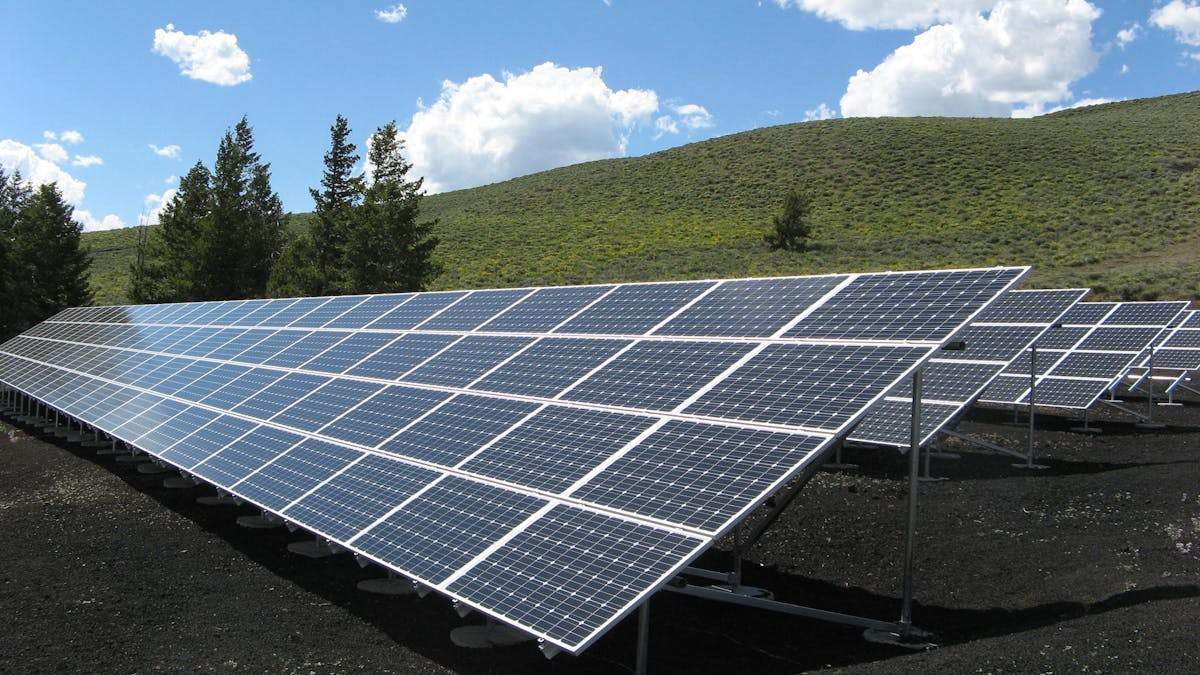
Utility-scale solar farms: Single-axis trackers have become the standard for large ground-mounted solar installations. The 25–35% production increase easily justifies the additional cost when spread across thousands of panels.
Commercial ground-mount systems: Businesses with ample land and high energy demands benefit from tracking’s increased output.
Agricultural applications: Trackers on elevated structures can shade crops below while maximizing solar production — a practice called agrivoltaics.
Why Trackers Usually Don’t Make Sense for Homes
Residential rooftop installations almost never use trackers. The reasons are practical: rooftop trackers add structural complexity and weight, require maintenance (motors, gears, sensors), aren’t compatible with most residential roof structures, and the cost premium exceeds the value of extra production for small systems.
For homeowners, the money spent on a tracking system is better invested in additional fixed panels, which achieve a similar production increase with no moving parts and no maintenance.
The Technology Behind Tracking
Modern trackers use a combination of GPS-based astronomical algorithms and light sensors. The algorithms calculate the sun’s exact position based on time, date, and location. Sensors provide real-time corrections for cloud conditions — some systems actually tilt panels flat during cloudy periods to capture diffuse light more effectively.
Advanced systems also account for terrain, wind conditions (retracting to a safe position during high winds), and even snow accumulation.
Cost and ROI
Single-axis trackers add $0.05–$0.10 per watt to system costs. For a 1 MW commercial system, that’s $50,000–$100,000 additional investment. With a 25–35% production increase, the payback is typically 3–5 years in good solar locations.
Dual-axis trackers cost more ($0.10–$0.20/W additional) and are mainly justified in specialized applications like concentrated solar or research installations.